Turning a conventional room thermostat high will not make a cold room heat faster. Set the temperature you need, then check whether the timer is allowing heat and what the thermostat is actually sensing.
EnergyFigures editorial team · Published · Reviewed
The hall is warm but the sitting room is cold
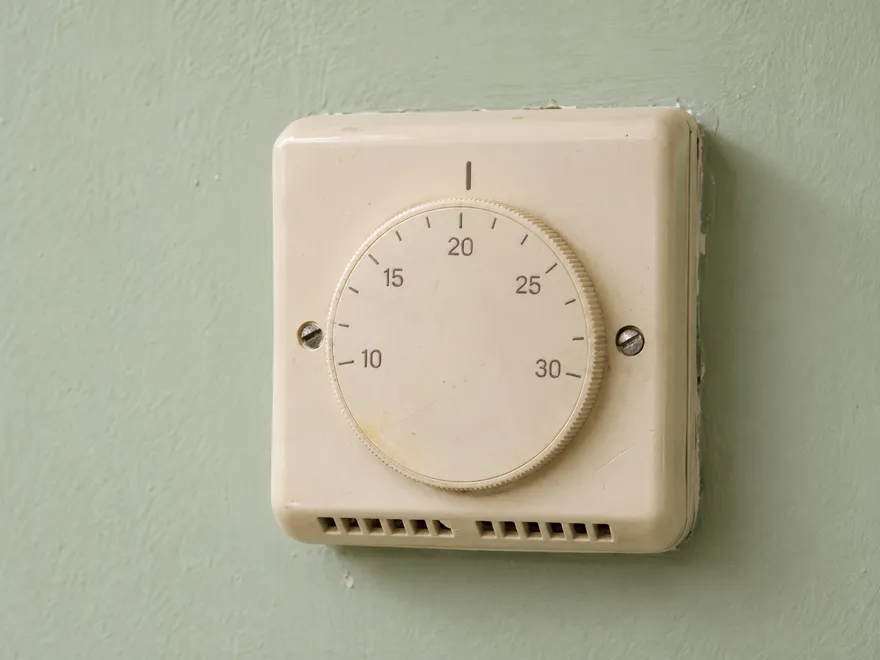
A thermostat on the hall wall responds to the air there. If sunshine or another heater warms that spot, the central heating can stop while your sitting room still feels chilly. Check where the stat sits and whether a coat or piece of furniture is covering it. Use a separate room thermometer to compare the two rooms without touching the wiring.
- Heating controls - Energy Saving Trust
Energy Saving Trust. Room thermostats, programmes, TRVs and hot-water controls. Accessed 25 November 2026.
The number changed back at lunchtime
On a programmable thermostat, a temporary override may last only until the next scheduled change. Read the next time and target on the screen. Look up “hold” and “advance” in the manual. If you want the same change tomorrow, note the old setting before you edit the programme.
It is asking for heat but only one radiator stays cool
Check whether other rooms warm up. If they do, keep the main setting steady and look at the affected room's radiator valve. If none responds, compare the programme, heat demand indicator and normal operating instructions, then arrange help if the fault persists. Keep the target suitable for anyone more affected by cold. A stuck or silent system needs attention even if turning the dial seems to clear it for a moment.
- Heating controls - Energy Saving Trust
Energy Saving Trust. Room thermostats, programmes, TRVs and hot-water controls. Accessed 25 November 2026. - Keeping your home warm this winter - Met Office
Met Office. Keeping your home and occupied rooms warm in winter. Accessed 25 November 2026.
Sources and further reading
- Heating controls - Energy Saving Trust
Energy Saving Trust. Room thermostats, programmes, TRVs and hot-water controls. Accessed 25 November 2026. - Keeping your home warm this winter - Met Office
Met Office. Keeping your home and occupied rooms warm in winter. Accessed 25 November 2026.
Related resources
- How to reduce heating bills in winter
Test one winter heating change with actual meter readings and a comfort check, then decide whether it is worth keeping for the rest of the season.
- How heating schedules affect energy consumption
Set a heating start time from when you need the room, then test a single timing change against comfort and actual energy use.
- How thermostatic radiator valves work
Find out why one radiator goes cool, how its numbered valve reacts to room temperature and when the rest of the system needs checking.
- How boiler flow temperature affects efficiency
Identify the radiator flow control on your boiler and decide whether you can safely try a lower setting while keeping the rooms warm.
- How to heat your home efficiently
Identify the heating in your new home and find the first control to learn before changing a timetable or temperature.