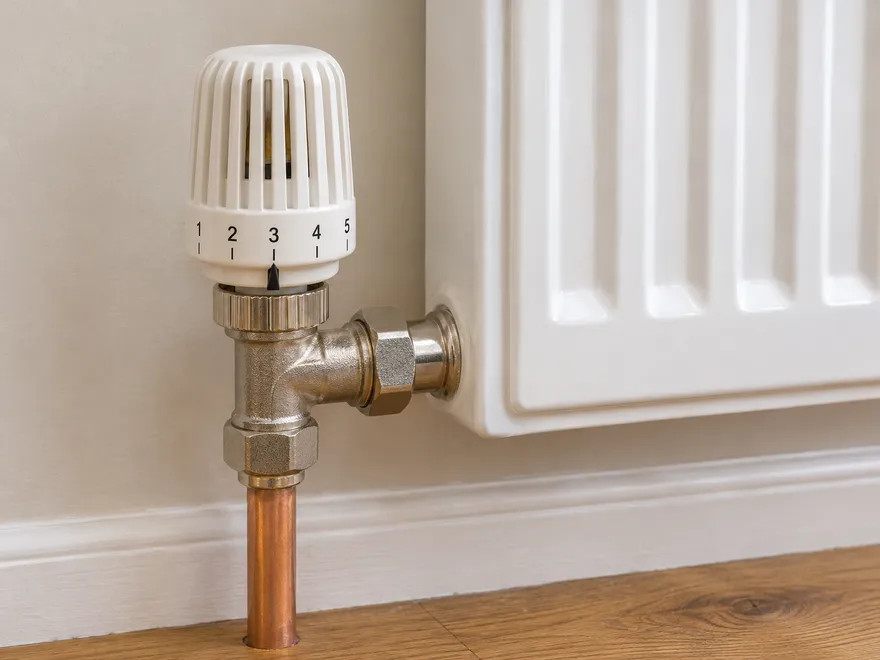
A cool radiator can be doing its job. A thermostatic radiator valve, often marked with numbers, slows the flow of hot water as the air around the valve warms up. Check the room temperature before deciding it is broken.
EnergyFigures editorial team · Published · Reviewed
Read the room as well as the dial
Imagine the living room is warm from people and afternoon sun while the hall still needs heat. The hall radiator can stay hot as the living-room one cools. Moving the valve up simply to keep the radiator hot can make the living room uncomfortable later. Numbers on different makes of valve do not all mean the same temperature.
- Heating controls - Energy Saving Trust
Energy Saving Trust. Room thermostats, programmes, TRVs and hot-water controls. Accessed 25 November 2026.
Follow the heat when the room really is cold
| What you observe | What to check |
|---|---|
| Other radiators warm while this room is chilly | Is the valve set for this room, and is a heavy curtain trapping warmth around its sensor? |
| All radiators cool despite a cold room | Is the central heating in a scheduled period and is the main thermostat calling for heat? |
| A smart valve changes its setting by itself | Check its room programme and how your particular controls call for boiler heat. |
When to ask for a repair
If the rest of the house is warm, the valve is clear of furniture and the room still will not reach a suitable temperature, tell the engineer exactly that. It is a more useful description than “the radiator feels cold”. Leave the fittings in place. The thermostat guide explains what to check when the problem affects the whole heating zone.
Sources and further reading
- Heating controls - Energy Saving Trust
Energy Saving Trust. Room thermostats, programmes, TRVs and hot-water controls. Accessed 25 November 2026.
Related resources
- How to heat your home efficiently
Identify the heating in your new home and find the first control to learn before changing a timetable or temperature.
- How to use a central heating thermostat efficiently
Troubleshoot a room thermostat that seems slow, chooses the wrong room temperature or keeps reverting after you adjust it.
- How to heat one room efficiently
Find the amount of main heating you would have to avoid for a portable heater in one room to reduce your total bill.
- How to reduce heating bills in winter
Test one winter heating change with actual meter readings and a comfort check, then decide whether it is worth keeping for the rest of the season.
- How heating schedules affect energy consumption
Set a heating start time from when you need the room, then test a single timing change against comfort and actual energy use.