Work backwards from the time you need the room to feel warm. Start with one awkward part of your day, such as breakfast or getting home from work. Changing the whole week's timer makes it hard to tell which change helped.
EnergyFigures editorial team · Published · Reviewed
A timetable for getting home at six
Suppose your usual target was reached at 18:35 after the heating came on at 17:50. That room took 45 minutes to warm from its starting temperature that evening. For an 18:00 arrival on a similar day, try 17:15 as a starting point. If your controller has automatic optimum start, check whether the time you enter already means “warm by”. Otherwise you could allow for warm-up twice.
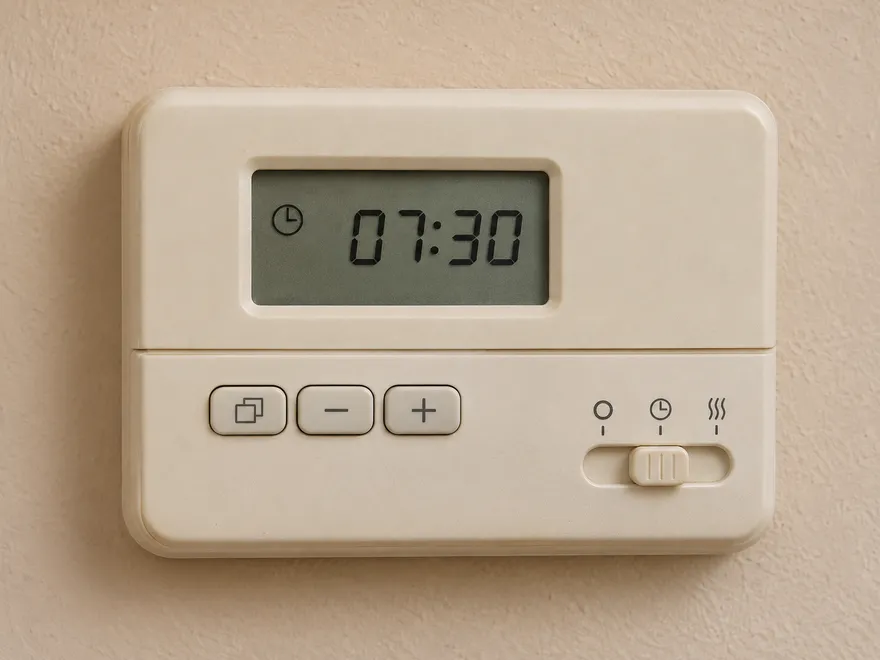
- Heating controls - Energy Saving Trust
Energy Saving Trust. Room thermostats, programmes, TRVs and hot-water controls. Accessed 25 November 2026.
Try the finish time separately
When the room is comfortably warm, note how long it stays that way after its normal evening heating period. If you experiment with an earlier finish, keep the start and target unchanged. Write down the outside conditions, the last comfortable time and the meter reading. A milder evening is a poor test of how the new programme will behave during frost.
This trial suits a system you can time in this way. For a heat pump, follow the installed routine and recommended setback before making large changes. If someone needs warmth throughout the day or overnight, plan round that need. Keep the setting that works on an ordinary day and use an override for the occasional late return.
- The most efficient way to run a heat pump
Energy Saving Trust. Energy Saving Trust: longer operating periods, setback and heating curve. Accessed 26 November 2026. - Keeping your home warm this winter - Met Office
Met Office. Keeping your home and occupied rooms warm in winter. Accessed 25 November 2026.
Sources and further reading
- Heating controls - Energy Saving Trust
Energy Saving Trust. Room thermostats, programmes, TRVs and hot-water controls. Accessed 25 November 2026. - The most efficient way to run a heat pump
Energy Saving Trust. Energy Saving Trust: longer operating periods, setback and heating curve. Accessed 26 November 2026. - Keeping your home warm this winter - Met Office
Met Office. Keeping your home and occupied rooms warm in winter. Accessed 25 November 2026.
Related resources
- How to heat your home efficiently
Identify the heating in your new home and find the first control to learn before changing a timetable or temperature.
- How to use a central heating thermostat efficiently
Troubleshoot a room thermostat that seems slow, chooses the wrong room temperature or keeps reverting after you adjust it.
- How to manage energy costs during a cold spell
Estimate whether today's prepayment credit can cover a cold spell, including standing charges, and know what to tell the supplier if it cannot.
- How heat pumps perform during winter
Work out whether higher heat pump electricity use in a cold spell is expected and what to note if the rooms never reach the temperature you set.
- How to reduce heating bills in winter
Test one winter heating change with actual meter readings and a comfort check, then decide whether it is worth keeping for the rest of the season.
- How thermostatic radiator valves work
Find out why one radiator goes cool, how its numbered valve reacts to room temperature and when the rest of the system needs checking.