If you have just moved in, find out what actually supplies the heat before copying the settings from your old home. A dial on the wall can control a boiler, a heat pump or one heater in one room.
EnergyFigures editorial team · Published · Reviewed
Follow the control back to the heat source
Look for the make and model on the accessible control panel and the handover pack. In a rental, ask which instructions belong to this flat. If a communal system supplies the building, ask the heat supplier or building manager which settings you can change yourself.
| Heating system | What you find | What to learn first |
|---|---|---|
| Boiler with radiators | Room thermostat plus a programmer or combined controller | Which zone asks for heat, and when the programme allows it. |
| Heat pump | Controller showing a heating curve, target or setback | Which routine the installer designed for steady heating and what a temporary override does. |
| Storage heater | Controls on an individual unit for stored heat or boost | When your tariff charges the unit and how the model releases its stored heat. |
- Heating controls - Energy Saving Trust
Energy Saving Trust. Room thermostats, programmes, TRVs and hot-water controls. Accessed 25 November 2026. - The most efficient way to run a heat pump
Energy Saving Trust. Energy Saving Trust: longer operating periods, setback and heating curve. Accessed 26 November 2026. - Electric storage heaters
Energy Saving Trust. Storage charging times, heat release and boost controls. Accessed 26 November 2026.
Leave yourself a note by the controller
Write one sentence for each control you need. For example, “The hall stat asks the boiler for heat and the bedroom valve controls that radiator.” Before changing anything, note the current setting and the time. Try one ordinary user setting while someone is home to see which room responds.
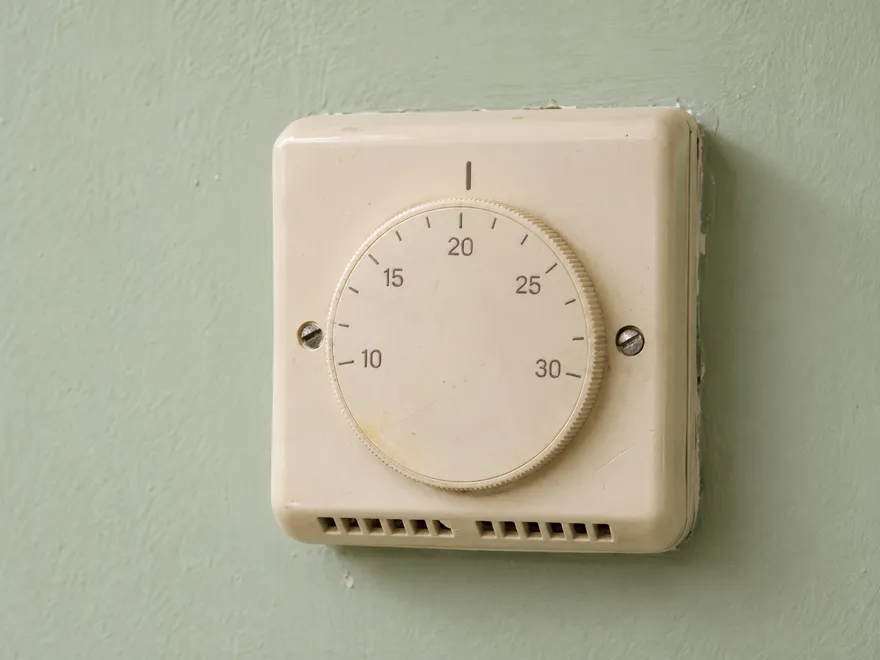
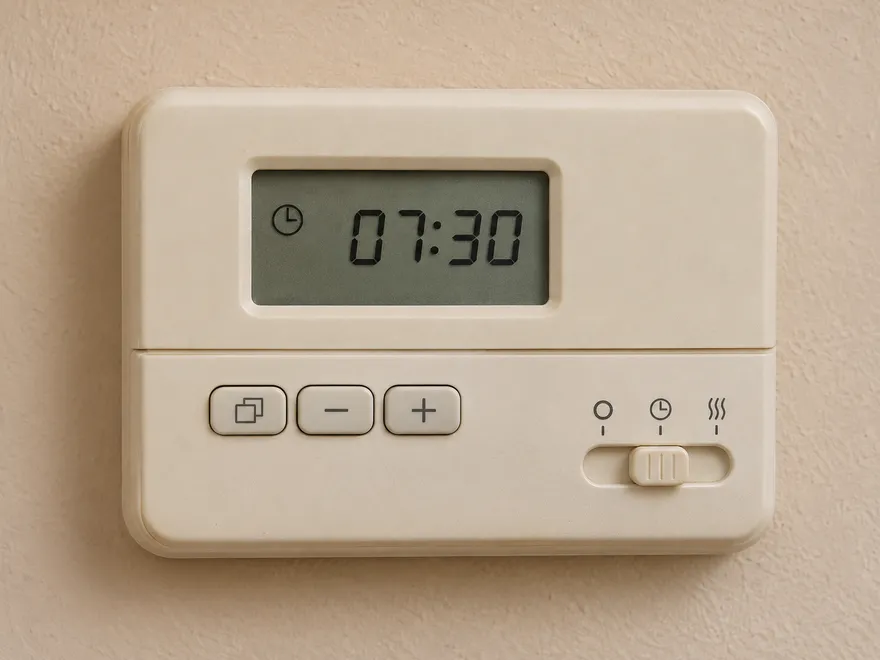
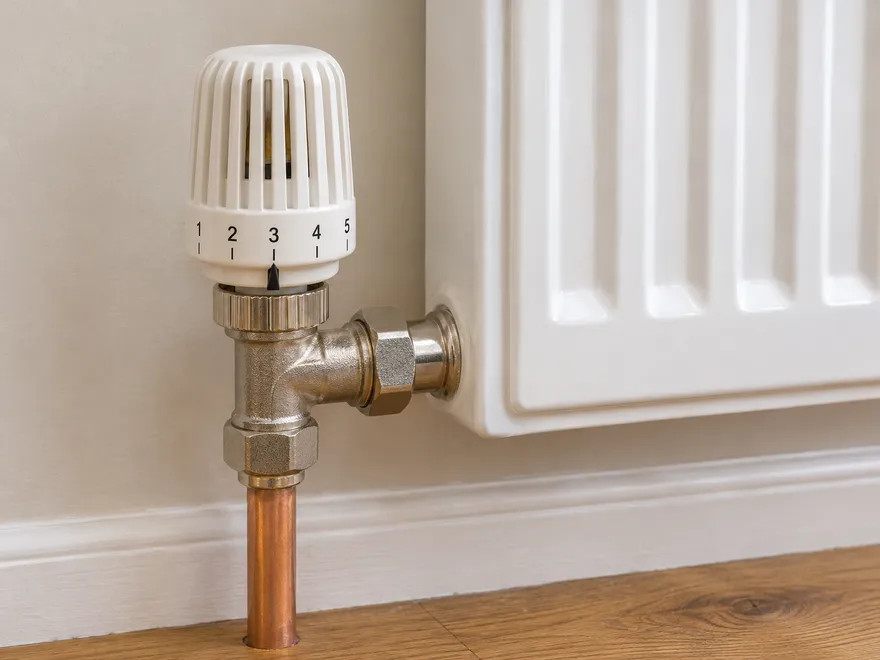
If the whole space is cold despite the system asking for heat, get the system checked. If the rooms become comfortable but too late for breakfast, you have a timing question. The heating-schedule guide takes you through that next step.
Sources and further reading
- Heating controls - Energy Saving Trust
Energy Saving Trust. Room thermostats, programmes, TRVs and hot-water controls. Accessed 25 November 2026. - The most efficient way to run a heat pump
Energy Saving Trust. Energy Saving Trust: longer operating periods, setback and heating curve. Accessed 26 November 2026. - Electric storage heaters
Energy Saving Trust. Storage charging times, heat release and boost controls. Accessed 26 November 2026.
Related resources
- How to use a central heating thermostat efficiently
Troubleshoot a room thermostat that seems slow, chooses the wrong room temperature or keeps reverting after you adjust it.
- How heating schedules affect energy consumption
Set a heating start time from when you need the room, then test a single timing change against comfort and actual energy use.
- How thermostatic radiator valves work
Find out why one radiator goes cool, how its numbered valve reacts to room temperature and when the rest of the system needs checking.
- Is your home suitable for a heat pump?
Prepare for a heat pump suitability survey by recording awkward rooms, checking space for equipment and describing the hot-water demand the system must meet.
- How to reduce heating bills in winter
Test one winter heating change with actual meter readings and a comfort check, then decide whether it is worth keeping for the rest of the season.