A standing charge is the daily price of an active supply on a tariff that includes one. Check what it adds up to over the dates on your bill. If you use both gas and electricity, you may pay a daily charge for each.
EnergyFigures editorial team · Published · Reviewed
Standing charge calculator
Where the daily charge appears
Look for a line headed “standing charge” beside the dates on your gas or electricity bill. It’s a price per day for keeping that supply active on a tariff that includes it. A day with no usage can still have a daily charge. If you have both fuels, check each section. The two daily prices can differ and both count towards the total bill.
Say your electricity standing charge is 50p a day for all 30 days on the bill. It comes to £15. For 31 days it comes to £15.50. If the supplier changes its price part way through a month, multiply the number of days at each price separately. Add the two amounts before checking against the statement. A gap between the billing dates and the day count is worth asking the supplier to explain.
- Energy price cap and standing charges explained | Ofgem
Ofgem. Coverage, calculation and the benchmark annual bill. Accessed 25 November 2026. - Energy price cap unit rates and standing charges | Ofgem
Ofgem. Applicable period, regional tables, meter type and payment method. Accessed 25 November 2026.
Why the charge varies
Energy has to reach your property through the networks. Ofgem’s information on standing charges lists factors that affect the regional figures, including the network costs, the number of people in an area and how much energy is supplied. Check the exact dates, fuel, region, payment method and meter before comparing your price with a headline figure.
Your tariff notice gives the rate for your supply. If you’re on a fixed deal, look at the deal’s terms. If you’re on an eligible default tariff in Great Britain, you can look up the relevant cap table. If you’re in Northern Ireland, use the figures that apply to your supplier and tariff in its separate market.
- Energy price cap unit rates and standing charges | Ofgem
Ofgem. Applicable period, regional tables, meter type and payment method. Accessed 25 November 2026.
Did a day get charged twice?
Suppose you became responsible for a home on 19 June and the bill ends on 30 June. Including both dates, that’s 12 days. At an example electricity standing charge of 48p a day, the daily part is £5.76 even if no electricity was used. If the amount is £6.24 at that same rate, the supplier has counted 13 days. Ask which extra date it included.
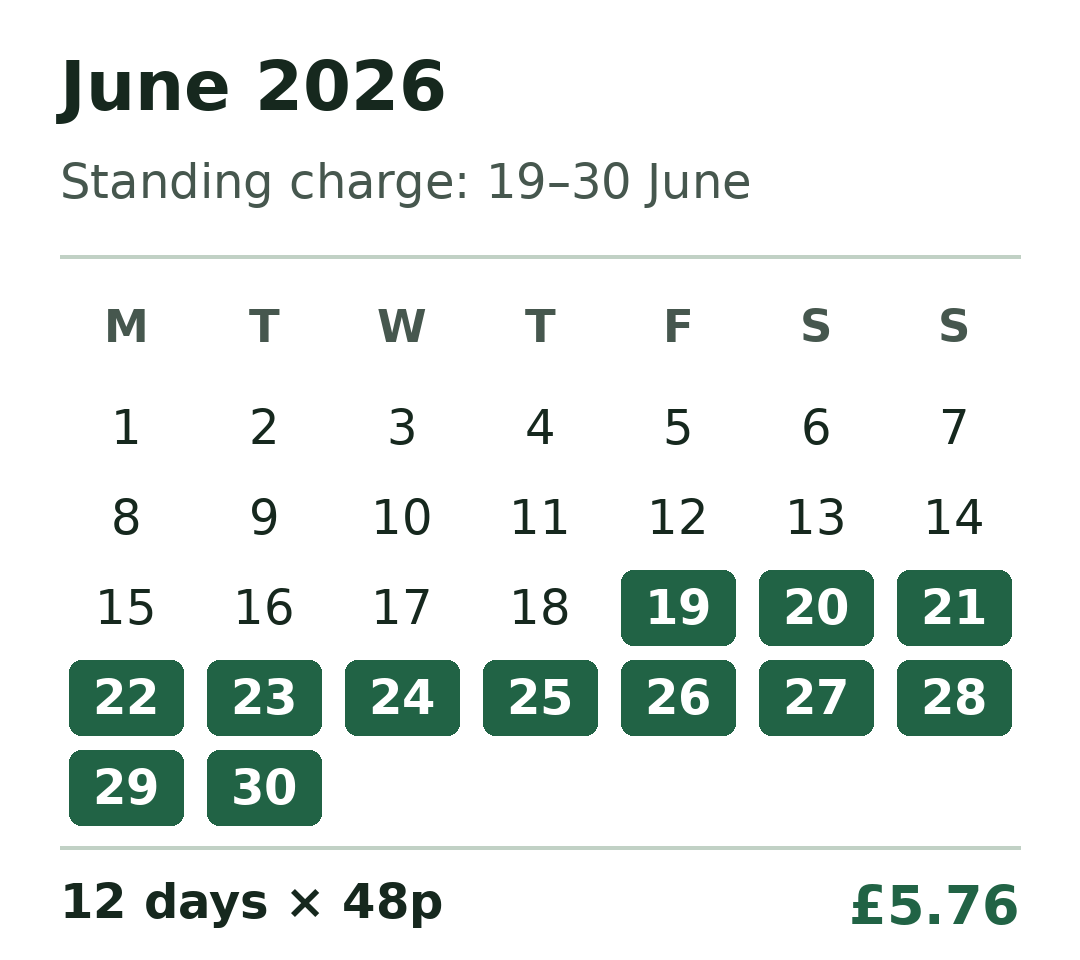
If the bill splits on a price change, check the last day charged at the old rate and the first day charged at the new rate. Some statements show the next meter-reading date as a boundary. Use the number of days billed on each line before deciding a date appears twice.
- Energy price cap unit rates and standing charges | Ofgem
Ofgem. Applicable period, regional tables, meter type and payment method. Accessed 25 November 2026. - Check if you’re responsible for paying an energy bill - Citizens Advice
Citizens Advice. Dates of responsibility for a supply. Accessed 25 November 2026.
Check dates if you’ve moved or left a home empty
If you’re billed for dates before you were responsible for a property, compare the statement with the handover date and opening reading. Keep the same records for the day you move out. Ask the supplier to confirm which dates it is charging to your account, especially when a bill covers the gap between tenancies.
If the home is empty but the supply remains connected, ask the supplier what charges continue. On a key or card meter, record the date and balance before you leave and ask how daily charges will be collected. If your next decision is about changing tariffs, the related guides compare different daily charges and cover offers with no standing charge.
- Check if you’re responsible for paying an energy bill - Citizens Advice
Citizens Advice. Responsibility for a supply at the start or end of a tenancy. Accessed 25 November 2026. - Regulated Tariffs | Utility Regulator
Utility Regulator. Regulated tariffs in Northern Ireland. Accessed 25 November 2026. - If you think you’ve been charged too much for your energy - Citizens Advice
Citizens Advice. Checking unexpectedly high charges, estimates and meter details. Accessed 25 November 2026.
Sources and further reading
- Energy price cap and standing charges explained | Ofgem
Ofgem. Who the price cap protects and what it covers. Accessed 25 November 2026. - Energy price cap unit rates and standing charges | Ofgem
Ofgem. Current and upcoming rates, payment basis and postcode lookup. Accessed 25 November 2026. - Energy price cap and standing charges explained | Ofgem
Ofgem. Coverage, calculation and the benchmark annual bill. Accessed 25 November 2026. - Energy price cap unit rates and standing charges | Ofgem
Ofgem. Applicable period, regional tables, meter type and payment method. Accessed 25 November 2026. - Check if you’re responsible for paying an energy bill - Citizens Advice
Citizens Advice. Dates of responsibility for a supply. Accessed 25 November 2026. - Check if you’re responsible for paying an energy bill - Citizens Advice
Citizens Advice. Responsibility for a supply at the start or end of a tenancy. Accessed 25 November 2026. - Regulated Tariffs | Utility Regulator
Utility Regulator. Regulated tariffs in Northern Ireland. Accessed 25 November 2026. - If you think you’ve been charged too much for your energy - Citizens Advice
Citizens Advice. Checking unexpectedly high charges, estimates and meter details. Accessed 25 November 2026.
Related resources
- How to compare tariffs with different standing charges
Compare tariffs with different daily standing charges and find when cheaper units outweigh a higher fixed cost.
- How to assess zero-standing-charge tariffs
Test a zero standing charge quote against the days your property is occupied, the electricity it uses while empty and any conditions.
- Why energy prices vary across Great Britain
Check whether a price difference really comes from your postcode by comparing both addresses on the same fuel, usage and payment terms.
- Standing charge calculator
Find out what your gas, electricity or combined standing charges cost per day, calendar month, quarter and year.
- Energy tariff comparison calculator
Compare two or three energy tariffs using the same gas and electricity consumption, standing charges and dates.
- How to reduce your energy bills in the UK
Check your tariff and use your meter to find the changes that could make the biggest difference to your UK household energy bills.
- How the Ofgem energy price cap works
See which tariffs Ofgem’s energy price cap covers and understand unit rates, standing charges and the national headline figure.
- What the latest energy price cap means for households
Find the current and next announced energy cap periods and see how a rate change could affect the household bill you actually pay.
- Why your energy bill is higher than the price cap
Find out why a household can pay more than the headline price cap and what to check if its tariff charges look wrong.